
The Ultimate Guide to Emergency Funds: Building Your Financial Fortress
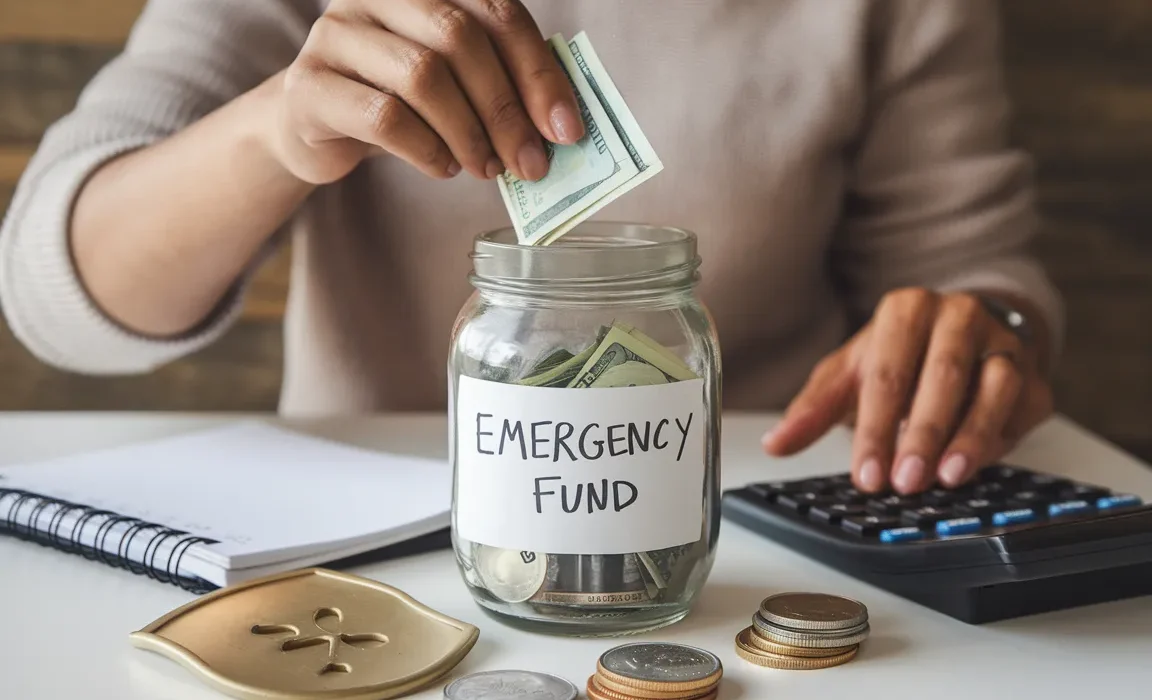
Let’s be completely honest about something nobody likes to admit: life is incredibly unpredictable, and usually, those massive surprises come with a hefty price tag attached. An emergency fund is exactly what it sounds like—it is a dedicated, aggressively protected savings pot set aside exclusively for the unexpected disasters of life. We are talking about a sudden corporate downsizing resulting in a job loss, a major transmission failure on the car you need to get to work, an unexpected out-of-pocket medical bill, or a roof that suddenly starts leaking during a massive winter storm.
We need to define exactly what an emergency fund is NOT. This is not a vacation fund. This is not a “treat yourself” fund for a new iPhone. It is definitely not a down payment fund for a house. It is your absolute, non-negotiable financial safety net. Having an emergency fund is the singular difference between a minor inconvenience and a devastating debt spiral. When you have cash sitting in the bank specifically earmarked for disasters, a flat tire stops being a crisis that ruins your month, and just becomes an annoying errand. It buys you the ultimate luxury: peace of mind.
Why Most People Do Not Have One (And How to Break the Cycle)
Despite being universally recognized as the absolute foundation of personal finance, a shocking number of people couldn’t cover a $400 emergency from cash if their life depended on it. Why? Because building an emergency fund is inherently boring. It doesn’t give you the dopamine hit of a new car, and it doesn’t give you the exciting returns of a rising stock market portfolio. It just sits there. Here are the dangerous psychological traps people fall into, and how you can break out of them:
- “I will start saving once I finally pay off my credit card debt.”
This is the most common, and most dangerous, mindset in personal finance. Emergencies do not politely check your debt-free timeline before they strike. The water heater doesn’t care if you just made a massive payment to Visa. If you don’t have a cash buffer, the next emergency will just go straight back onto the credit card, trapping you in a never-ending cycle of high-interest debt. You must have a starter emergency fund BEFORE you attack your debt. - “I literally do not earn enough money to save anything right now.”
It absolutely feels that way, especially during periods of high inflation. But you must start micro-saving to build the habit. Even saving £20 or $20 a week builds to over $1,000 in a year. Cancel a single subscription, skip one takeaway a month, and redirect that exact amount automatically into a savings account. You have to start somewhere, even if the progress feels microscopic at first. - “My credit card IS my emergency fund.”
This is a terrifying strategy. Using a credit card with a 24% APR for a crisis isn’t an emergency fund; it is pouring gasoline on a fire. When you lose your job, you don’t need the added stress of a compounding 24% interest payment hanging over your head. Credit lines can also be slashed by banks during economic downturns exactly when you need them most. Only cash is king in a true emergency.
Phase 1: The “Starter” Emergency Fund
If looking at a massive goal of saving $15,000 to cover six months of expenses feels completely overwhelming, you need to stop looking at the top of the mountain. You need to break it down into phases.
Your very first goal—before you invest a single penny in the stock market, and before you make any extra payments on your credit cards—is to build a “Starter” Emergency Fund. The universally agreed-upon target for this is $1,000 (or £1,000).
Why $1,000? Because a thousand dollars covers roughly 80% of the minor emergencies that typically force people to reach for a credit card. It covers the new alternator for the car. It covers the urgent plumber callout. It covers the cracked phone screen.
You need to hit this $1,000 target as fast as humanly possible. Treat it like an absolute hair-on-fire emergency. Work a weekend of overtime, sell the old guitar sitting in your closet, deliver pizzas for two weekends, or aggressively slash your grocery budget to bare bones for 30 days. Get the $1,000 into a separate account immediately.
Phase 2: The Fully-Funded Safety Net
Once your toxic, high-interest debt is completely paid off, you graduate to building your fully-funded safety net. The standard, time-tested recommendation in the personal finance community is to save 3 to 6 months of essential living expenses. Notice the crucial word there: “essential.”
You do not need to save 3 to 6 months of your entire gross income. You only need to save enough to keep the lights on, the landlord paid, and food on the table if your income suddenly drops to absolute zero. This baseline survival figure should cover exactly four things:
- Housing: Your absolute minimum rent or mortgage payment, plus property taxes if applicable.
- Essentials: Basic, no-frills groceries (no dining out) and critical utilities (water, power, heating, basic internet).
- Transport: Car payments, mandatory auto insurance, and the petrol needed to drive to job interviews.
- Obligations: Minimum debt repayments required to keep your credit score from tanking, plus essential health insurance premiums and necessary medications.
Should You Aim for 3 Months or 6 Months (or 12)?
Three to six months is a massive range. How do you decide exactly what your specific target should be? It entirely depends on your personal risk profile.
Aim for a 3-Month Fund if:
- You are single with absolutely no dependents.
- You rent an apartment (meaning you are not responsible for massive home repairs like a new roof).
- You have a highly secure, high-demand job (like a tenured teacher or a specialized nurse) where you could easily find a new job in a matter of weeks.
- You have healthy family members you could legally and practically fall back on if total disaster struck.
Aim for a 6-Month Fund if:
- You own a home (houses break, and repairs are shockingly expensive).
- You have children or a spouse who completely relies on your income to survive.
- You work in a cyclical or highly volatile industry (like tech startups, construction, or commissioned sales).
- You have a chronic medical condition that requires consistent out-of-pocket funding.
Aim for a 12-Month Fund if:
- You are entirely self-employed or run your own small business, where income can dry up for months at a time.
- You are nearing retirement and want an absolute “cash cushion” to avoid selling stocks during a market crash.
Step-by-Step: The Blueprint to Getting Fully Funded
Once you know your exact target number, here is the blueprint to actually achieving it without burning out:
- Open a Dedicated, Physically Separate Account: Do not, under any circumstances, keep your emergency fund in your main daily checking account. If you log in and see it every single day, your brain will eventually rationalize spending it. “I’ll just borrow $200 for this concert ticket and pay it back next week.” You won’t. Open a completely separate account, ideally at an entirely different bank, so it takes 24 hours of effort to transfer the money back to your checking account. This friction saves you from impulse spending.
- Automate Your Contributions: Treat your emergency fund contribution exactly like a utility bill that you are legally required to pay. Set up a standing order or an automatic transfer on the exact day you get paid. If you automate it, you don’t have to rely on willpower. The money disappears into the vault before you can spend it.
- Turbocharge it with Unearned Windfalls: This is the secret cheat code to saving rapidly. Whenever you receive a tax refund, an annual work bonus, a small inheritance, or a birthday check from your grandmother, that money should NOT go toward a new TV. Route 100% of these unexpected windfalls straight into the emergency fund. Because you weren’t expecting the money in your monthly budget, you won’t even miss it.
- The Replenishment Rule: If you actually have to drain the fund to fix your car—congratulations, it did exactly what it was designed to do! You successfully navigated a crisis without going into debt. But the moment the crisis is over, rebuilding that fund back to its target level becomes your absolute number one financial priority again. Stop investing, stop extra debt payments, and refill the vault.
Where Exactly Should You Store This Much Cash?
When you have $15,000 or £10,000 saved up, the question of where to put it becomes critical. Because an emergency fund is an insurance policy and not a wealth-building investment, the rules for storing it are entirely different from the rest of your portfolio:
- It MUST be highly accessible (Liquid): You need to be able to withdraw this cash and have it in your hands within 1 to 2 business days. Tying it up in a 5-year Certificate of Deposit (CD) or locking it in real estate equity is completely useless when you need to pay a surgeon on a Tuesday morning.
- It SHOULD earn high interest: You should not leave it rotting under a mattress or in a traditional checking account paying 0.01% interest. Keep it in a High-Yield Savings Account (HYSA) or a Cash ISA. In today’s environment, these accounts often pay 4% to 5% interest completely risk-free. Earning $500 a year in free interest just for letting your emergency fund sit there helps fight the eroding power of inflation.
- It ABSOLUTELY MUST NOT be invested in the stock market: Never, ever put your core emergency fund in an index fund, single stocks, or cryptocurrency. Markets are incredibly volatile. The economy works in cycles, and job losses usually correlate directly with stock market crashes. The absolute worst-case scenario is losing your job during a recession, needing to pull $10,000 from your emergency fund to survive, and discovering it is only worth $6,000 because the market just crashed 40%. Keep this money strictly in cash.
Calculate Your Specific Target Today
Ready to figure out your exact mathematical target? Take the guesswork out of the equation. Work out exactly how long it will take to build your 3-to-6 month safety net by plugging your specific monthly expenses into our free, highly detailed Savings Goal Calculator.